
Cracking Botswana’s Startup Paradox: How Vumbua Engineers Serendipity


What if Botswana has all the right pieces for a thriving startup economy, but they’re stuck in the wrong places?
That’s the essence of the paradox, and the problem Vumbua was built to solve.
Engineering Serendipity: A Systems Approach to Botswana’s Startup Paradox
Botswana has long been one of Africa’s most stable and forward-looking nations. With strong governance, sound infrastructure, and a bold national strategy, it’s no surprise the country is drawing attention from entrepreneurs, investors, and policymakers. But as Paul O’Brien, publisher of Startup Economist, points out in his recent piece, “Botswana’s Startup Paradox,” something isn’t clicking.
Even with numerous accelerators, public-private partnerships, and well-funded initiatives, Botswana’s startup scene remains curiously fragmented. Capital is available. Talent exists. Support organizations are in place. And yet, startups struggle to scale. Investors fail to find promising pipelines. Founders feel isolated, and would-be collaborators remain invisible to one another.
At first glance, it looks like a mismatch of supply and demand. But dig deeper, and it starts to resemble something else entirely: a systems design problem.
Beyond the Basics: Structure Matters More Than Support
Too often, ecosystem strategies default to increasing inputs, launching more programs, training more entrepreneurs, and cutting more checks. But what if the bottleneck isn’t what’s being offered, but how the pieces are connected?
This is the heart of what O’Brien describes: an ecosystem with many assets, but little coherence. A startup can’t thrive if it doesn’t know where to go next. An investor can’t deploy capital if there’s no clear pipeline.
You can’t scale innovation without visibility, connectivity, and structure.
As we often say: “It’s not the ingredients—it’s the recipe.” You can have all the right parts and still fall short if they aren’t assembled in the right way.

That’s where new tools and new thinking come in.
A Role-Based Roadmap: Rethinking Ecosystem Mapping
At Storm King Analytics, we’ve been developing a platform called Vumbua, Swahili for “discover,” that uses artificial intelligence, network theory, and role-based mapping to help make sense of complex innovation ecosystems. We’re currently in early-stage conversations about applying this approach in Botswana, in collaboration with local innovation consultancy Pulaspace, whose work was highlighted in O’Brien’s article.
Unlike traditional mapping efforts that track individuals and their connections, Vumbua applies a methodology adapted from sociology known as the Position Generator. Instead of asking “Who do you know?”, it asks “What roles exist, and how do they interact?”
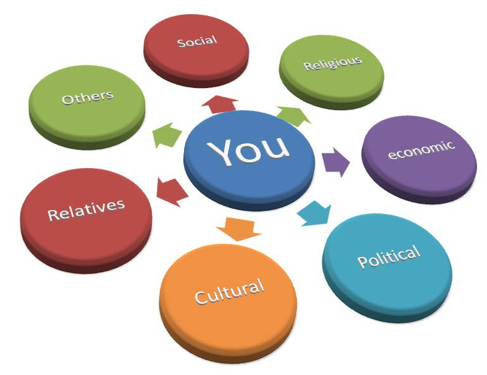
By focusing on roles, founders, funders, incubators, policymakers, researchers, and service providers, we can avoid problems like privacy concerns, data turnover, or personality-driven insights. And more importantly, we can start to see the system as a whole.
From Description to Prescription
Once the ecosystem is mapped, Vumbua’s AI engine can analyze its topology - is it centralized or distributed? Fragmented or resilient? It classifies the system’s structure, benchmarks it globally, and recommends targeted interventions.
Are early-stage investors disconnected from incubators?
Are mentors concentrated in one sector but missing in others?
Are policymakers unaware of barriers experienced by actual founders?
These questions aren’t answered by opinion - they’re revealed by structure.
Tools to Empower, Not Just Observe
If implemented, the Vumbua framework would offer two connected tools:
The Ecosystem Network Analysis Tool – A strategic AI engine for policymakers and funders to assess, benchmark, and optimize the startup landscape.
The Network Phone Book – A dynamic discovery engine helping entrepreneurs, investors, and service providers find each other based on role, sector, and need.
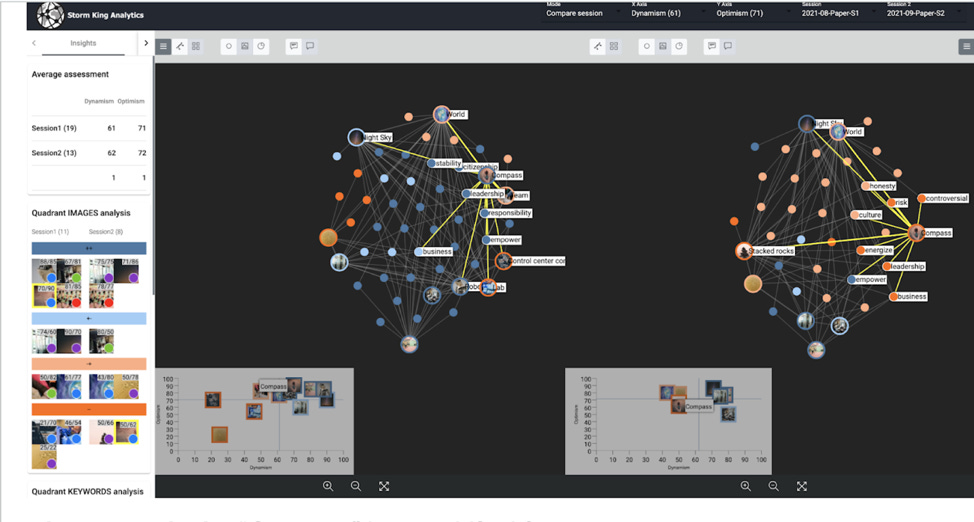
Together, these tools move beyond static dashboards or once-a-year reports. They turn ecosystem mapping into a living infrastructure for connectivity and growth.
Exploring What’s Possible, Together
While no formal pilot has begun, the collaboration between Storm King Analytics and Pulaspace reflects a shared vision: to shift from activity to insight, from fragmentation to functionality. By combining local expertise with systems-based tools, we’re exploring how Botswana can not only understand its entrepreneurial ecosystem—but actively shape it.
Final Thought: Serendipity Can Be Engineered
In ecosystems, as in life, success often depends on the right people finding each other at the right time. That’s the paradox Paul O’Brien surfaced. And that’s what Vumbua aims to solve.
Serendipity may feel like magic, but it’s often the result of well-designed systems.
The question isn’t whether Botswana has the raw materials for a thriving startup economy. It clearly does.
The real challenge, and opportunity, is in how we connect them.
Join the Journey
If you're an entrepreneur, policymaker, investor, or ecosystem builder striving to turn potential into momentum, we’d love to hear from you.
Let’s build the next phase of innovation infrastructure, smarter, more connected, and designed for discovery.
Reach out. Get mapped. Be discovered.
Because the future doesn’t just happen, it’s engineered.
@Paul Thx for the kind words. Your framing of Vumbua as “metacognition for ecosystems” is both spot-on and inspiring. I’m surprised that our paths haven’t crossed before, given how aligned our thinking seems to be.
Your work on Botswana’s Startup Paradox was a major catalyst for this post, and we’re excited to be in early conversations with Pulaspace to explore what this systems-level shift might look like in practice.
Would love to continue the exchange, either here or offline. I have a feeling there’s a lot we can build together.
This is brilliant, and exactly the systems-level insight Botswana needs right now.
What Vumbua is proposing isn’t just mapping; it’s metacognition for ecosystems. It’s how we think about how we think (and connect) across roles, resources, and roadblocks. That shift from describing activity to designing connectivity is the missing layer I tried to highlight in Botswana’s Startup Paradox. And it’s precisely what most well-meaning initiatives miss.
Too often, ecosystems throw more accelerators, events, and workshops into the mix thinking "more ingredients = better recipe." But if founders don’t know which role to talk to next, and funders can’t see the pipeline forming, no one can act. Visibility is viability.
Botswana doesn’t need to manufacture potential, it needs to wire the circuit. And from what I see, Vumbua and Pulaspace are building the switchboard.
Let’s go from ecosystem inventory to ecosystem intelligence and let Botswana be the model of how to do it right.